WonderTrail Kids Activity Vault Review: 3,200 Prompts for $17
I bought WonderTrail Kids Activity Vault to see whether 3,200 structured prompts really beat starting from a blank page. It does, with one big caveat about ChatGPT.
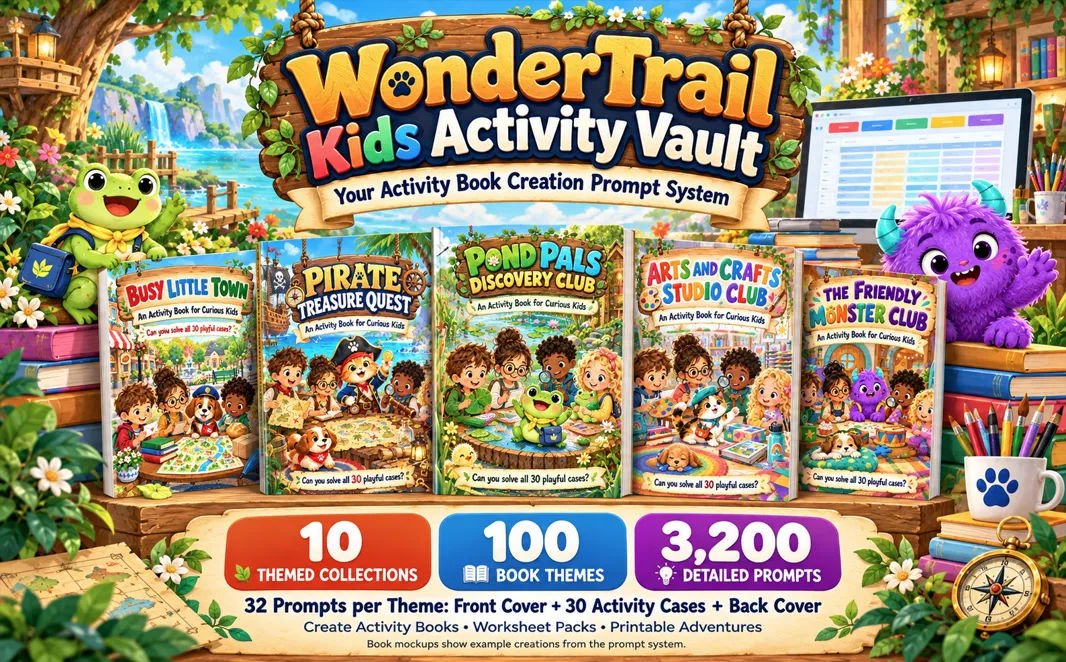
I bought WonderTrail Kids Activity Vault on a Tuesday night after losing an argument with a maze. Not a real maze. A maze I had asked ChatGPT to draw for a frog-themed activity book, which came back with a dead end that went nowhere and a solution path that ran straight through a wall. I had already burned two evenings on that one book, and it was going to be twelve pages.
WonderTrail Kids Activity Vault is a prompt library from Miyuki at canicoloring.com. It sells for $17 on WarriorPlus and it is built on a simple premise: instead of vaguely asking an AI for "a cute activity page", you paste in a prompt that already specifies the mascot, the palette, the page size, the safe margins, the exact header text and the rules the puzzle has to follow. There are 100 themes and 32 prompts per theme, so 3,200 prompts in total.
I paid my own money. I have run through a full theme, skimmed several others, and opened every one of the Excel files so I could tell you what is actually inside rather than what the sales page promises. And there is one limitation you need to hear about before you spend the $17.
Our Verdict
WonderTrail Kids Activity Vault
A well-structured 3,200 prompt library for anyone making kids activity books with ChatGPT. The prompts fix the consistency problem, but you still have to generate and review every page yourself.
30-day money-back guarantee, subject to the terms at checkout
What You Actually Get
After checkout you get a download with ten Excel files and a master index. The Excel files are the 10 theme collections. The master index is the bit I did not expect to care about and then used constantly, because scrolling through a spreadsheet of 3,200 rows looking for "under the sea" is nobody's idea of a good morning.
Each of the 100 themes follows the same 32-prompt sequence: one front cover prompt, thirty CASE prompts, one back cover prompt. The thirty CASE prompts are not thirty identical pages with a different animal on them. They cycle through roughly thirty activity types: match the objects, find the missing part, locks and keys, sorting, mazes, find the matching image, spot the differences, complete the pattern, shadow matching, count the objects, compare sizes, positional awareness, find hidden objects, word search, simple logic, and more.
The themes themselves are the strongest part of the offer, because they are specific rather than generic. Friendly Animals covers Pond Pals, Woodland Friends, Pet Care, Panda, Puppy, Kitten, Bunny, Lamb and Hamster. The other nine collections follow the same shape: Wild Animal Adventures (Safari, Arctic, Rainforest, Savanna, Big Cats), Nature Discovery (Bug Explorer, Weather, Camping, Birdwatchers, Fireflies, Bees, Butterflies), Water Adventures (Under the Sea, Lighthouse, Riverboat, Harbor, Aquarium, Mermaid Lagoon), Magical Worlds (Fairies, Monsters, Unicorns, Castles, Dragons), Science and Space, Travel and Transportation, Community Helpers, Creative Fun, and Big Adventures with Pirates and Volcanoes.
Two bonuses come bundled in, with no separate purchase. Bonus 1 is the Color, Learn & Play Collection: 10 structured book sets, 320 prompts, 300 activity CASE pages, with front and back cover prompts. Bonus 2 is the Themed Notepad Collection: 30 notepad sets, 150 prompts, 5 layout templates per collection, and the sales page claims 75 percent or more open writing space on each. That is 470 bonus prompts on top of the 3,200.
Key Features
The structured prompt format is the whole product. A generic prompt reads like "create a cute frog-themed activity page for kids" and you get whatever the model feels like that afternoon. A WonderTrail prompt locks down the output format (US Letter portrait, 8.5 by 11 inches), the style, the world (for example Pond Pals Discovery Club), the mascot (Puddle, a smiling frog explorer), the header text that must be printed exactly, the activity rule that the puzzle must have a logically valid solution, the safe margin of 0.5 inch inside the page, and a negative list telling the model what not to do: no cropped text, no wrong title, no extra labels.
That negative list matters more than it sounds. Cropped text and stray title changes are the two things that ruin a printable, and telling the model about them up front saves a re-roll.
The consistency framework is wrapped around that. Mascots, palettes and settings are defined once per theme and referenced in all 32 prompts, so page 27 does not suddenly feature a different frog in a different shade of green. If you have ever assembled a 30-page book and found that the main character changes eye colour halfway through, you know why this exists.
The activity variety is what keeps the books from feeling like a maze workbook. Mazes, matching, shadow puzzles, counting, word searches, decoding, patterns and sorting rotate through the CASE slots so a finished book has rhythm.
The Excel plus master index is unglamorous but practical. You can work through a theme as a checklist, tick off cases as you generate them, and search by theme name rather than remembering which file things live in.
And the commercial use angle: the sales page says you can use the library as a foundation to develop products for personal or commercial use, subject to the image usage rights your AI tool grants you and the rules of whichever marketplace you sell on. Read that clause twice. It is doing a lot of work.
Actually Using It
I picked Pond Pals, because frogs. The front cover prompt came out first, and this is where the difference between WonderTrail and my usual method showed up immediately. Instead of a frog floating in the general vicinity of some lily pads, I got a cover with the title locked to the correct text, the mascot rendered the same way the prompt described, and the border sitting inside the safe margin. One generation. I did not regenerate it. In my old workflow that cover would have taken four attempts and a session in Photoshop.
Then the CASE pages. I did the first five in one sitting, roughly twelve minutes of prompt pasting and maybe seven minutes of looking at what came back. Here is the part nobody tells you: the prompts do not produce a finished book. They produce an image per prompt, and you are the one who checks whether the shadow puzzle actually has a matching pair, whether the maze solution is valid, whether the count-the-objects page has the number of objects the answer key claims.
The prompts help by instructing the model to keep the activity logically valid. They cannot guarantee it. I got a spot-the-differences page where the difference between the two panels was a slightly different shade of pond water, which a six year old will not find and a parent will not thank you for. I regenerated that one. Out of fifteen CASE pages I generated, four needed a second pass and one needed a third. That is a much better hit rate than I get freehand, and it is still not a hands-off process.
The header lock turned out to be the quiet hero. Every page is instructed to print the CASE number exactly, which means when I assemble the book the pages are already numbered and I do not have to remember which file was case eleven. Small thing. Saves a genuinely annoying step.
The word search was the weakest case type for me. The prompt asks for a word search, and ChatGPT will happily draw you a grid of letters that looks like a word search but does not contain half the words. I ended up checking every letter by hand on that one, which cost me more time than just writing the puzzle myself would have. If you are building puzzle books specifically, budget for manual verification on anything with an answer key.
The bonuses are not filler in the way bonuses usually are. The Color, Learn & Play sets combine colouring with observation and reasoning on the same page, so a child colours the scene and then answers something about it. That is a different product from a pure activity book and the prompts for it are structured the same way. The notepad sets I have not used for a product yet, purely because notepads are not the niche I am in, but the five layout templates are there and the open writing space claim holds on the ones I generated.
What I have not done is finish and publish a book with it. I am not going to pretend otherwise. I have generated maybe forty pages across three themes, one of which I am partway through assembling. Anyone telling you this is a weekend product is either faster than me or less fussy about their output.
Want to stop retyping the same mascot description fifty times?
Includes both bonuses and a 30-day money-back guarantee, subject to the terms at checkout
Pricing and Value Analysis
The price is $17. The sales page lists a crossed-out $95 as the original price and mentions it once in the body, so treat that as retail framing rather than what anyone actually pays. $17 is the number.
I have bought worse things for $17. The question is whether 3,200 prompts is worth that, and honestly the count is misleading in your favour. You will not use 3,200 prompts. Nobody is building 100 activity books. What you are buying is a system you will use thirty-two times for one theme, maybe sixty-four if you do two, and the value is in not rebuilding that system from scratch.
For comparison, here is roughly where the alternatives sit.
| Option | Typical cost | What you get |
|---|---|---|
| WonderTrail Kids Activity Vault | $17 | 3,200 structured prompts, 100 themes, 2 bonus collections |
| Commissioned illustrator | Varies widely by artist | Custom artwork, no prompting and no review work |
| Generic AI prompt pack | Usually cheap | Short prompts with no theme structure or consistency rules |
| Doing it yourself freehand | $0 plus your time | Full control, and the exact maze problem I started with |
The illustrator column is deliberately vague because I do not know what your local artist charges and I am not going to invent a figure. What I do know is that $17 is roughly the cost of one coffee and a pastry where I live, and that my time rebuilding prompts from scratch for one 30-page book is worth considerably more than that.
The refund policy is 30 days, subject to the terms shown at checkout, processed through WarriorPlus via PayPal or card. If you bounce off the prompt format in the first afternoon you can get your money back. That takes most of the risk out of the decision, which is probably why they offer it.
Pros and Cons
Pros
- 100 themes that are specific enough to actually pitch, not vague category names
- The prompt structure fixes the mascot and palette drift that ruins longer books
- Front cover, 30 cases and back cover means no blank page at any point
- Both bonuses are genuinely different products, not recycled pages
Cons
- You still generate and review every page yourself, including checking puzzle answers
- Word searches and answer-key puzzles need manual verification
- It is a prompt library, not 100 finished book files, and some buyers will miss that
- Commercial use depends on your AI tool's terms and each marketplace's rules
Who This Is For
You are making kids activity books, printables or classroom worksheets with an AI image tool and you are tired of writing the same style block over and over. You want to sell on Etsy, Amazon KDP or your own store, you understand that the AI output needs review, and you would rather spend your time editing than planning. The 100 themes are also a decent ideas list if you are stuck on what niche to attack next. If that is you, WonderTrail Kids Activity Vault is the cheapest version of that system I have seen.
Who Should Skip It
Skip it if you thought you were buying 100 ready-made books. You are not. If you have no AI image tool, no interest in learning one, or no intention of reviewing generated pages for errors, the prompts will sit in a folder. Skip it too if you only make puzzle books where every answer key must be exact, because you will be hand-checking everything anyway and the structure buys you less. And if you already have a prompt workflow that works, this is a tidier version of what you have, not a new capability.
Frequently Asked Questions
Is WonderTrail Kids Activity Vault worth $17?
For anyone building AI-assisted activity books, yes. The $17 buys 3,200 structured prompts across 100 themes plus two bonus collections, and the fixed mascot, palette and margin rules solve the consistency problem that eats time in longer books. If you do not make this kind of product, it is not worth anything to you.
Does WonderTrail include 100 ready-made activity books?
No. WonderTrail is a structured prompt library, not 100 finished book files. You choose a theme, copy the 32 prompts, generate the images in an AI tool such as ChatGPT, review the results, and assemble the pages into your own product. The themes and layouts remove the planning work, not the production work.
What do I actually receive after buying WonderTrail?
You get 10 Excel files covering 100 themes across 10 collections, a master index for navigation, and 3,200 prompts in total. Two bonuses are included at no extra cost: 10 Color, Learn and Play book sets with 320 prompts, and 30 themed notepad sets with 150 prompts.
Can I sell the books I make with WonderTrail?
The sales page says you can use the library as a foundation for personal or commercial products such as activity books, worksheets and notepads. Before listing anything, check the image usage rights of your chosen AI tool and the rules of the marketplace you sell on. Those two things are on you.
Do I need ChatGPT to use WonderTrail?
You need an AI image generation tool that accepts detailed text prompts, and the sales page walks through using ChatGPT specifically. The prompts are written as copy-and-paste blocks, so any tool that handles long structured prompts should work, though I only tested it with ChatGPT.
Is there a refund policy on WonderTrail?
Yes. There is a 30-day money-back guarantee, subject to the terms shown at checkout, and purchases are processed through WarriorPlus using PayPal or a card. You can request a refund within that window if the product is not right for you.
How long does it take to build one activity book with WonderTrail?
I cannot give you a clean number, because it depends on how fussy you are and how many pages need regenerating. In my run, generating fifteen CASE pages took under twenty minutes and checking them took longer. Assembling a full 32-page book is a multi-session job, not an afternoon.
Final Verdict
WonderTrail Kids Activity Vault does one thing well and is honest about the rest. The structured prompts kill the consistency drift that makes long activity books look homemade in the bad way, and the theme list is specific enough that I found three I want to build before I finished reading it. My fourteen pages of usable output for an evening's work is a better ratio than anything I managed freehand.
The catch is the one the sales page states plainly and some buyers will skip past: this is a prompt library, and the reviewing is yours. If you go in knowing that, $17 is a fair price for a system that saves you the planning and the retyping. If you wanted finished books, this is not that, and the 30-day guarantee is your way out.
One theme, 32 prompts, no blank page
Buy once, download the Excel files and master index straight away
Related Posts

WellPrint Review: I Made a 30-Day Wellness Plan in Four Minutes
I timed WellPrint from blank page to a finished 30-day plan PDF. Under four minutes, and the words were the part I'd normally lose a weekend to. Here's the honest breakdown.
Prepper Book Builder Review: 72 KDP Topics, One Prompt
I turned one prepper topic into a full editorial brief and pasted it into my AI. Here is what the Prepper Book Builder actually does, and where it falls short.
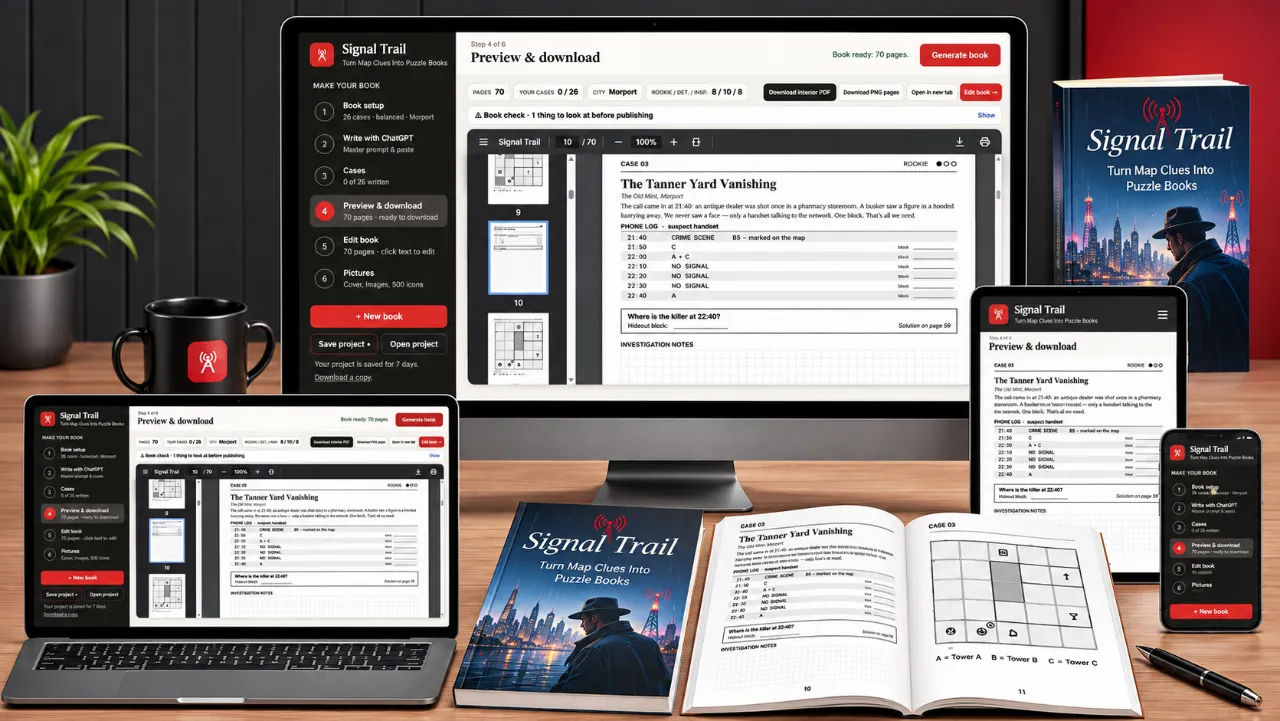
Signal Trail Review: Map Clue Puzzle Books
I built a 30-case detective puzzle book in an evening and only cried once. Here is what Signal Trail actually does, and where it annoyed me.
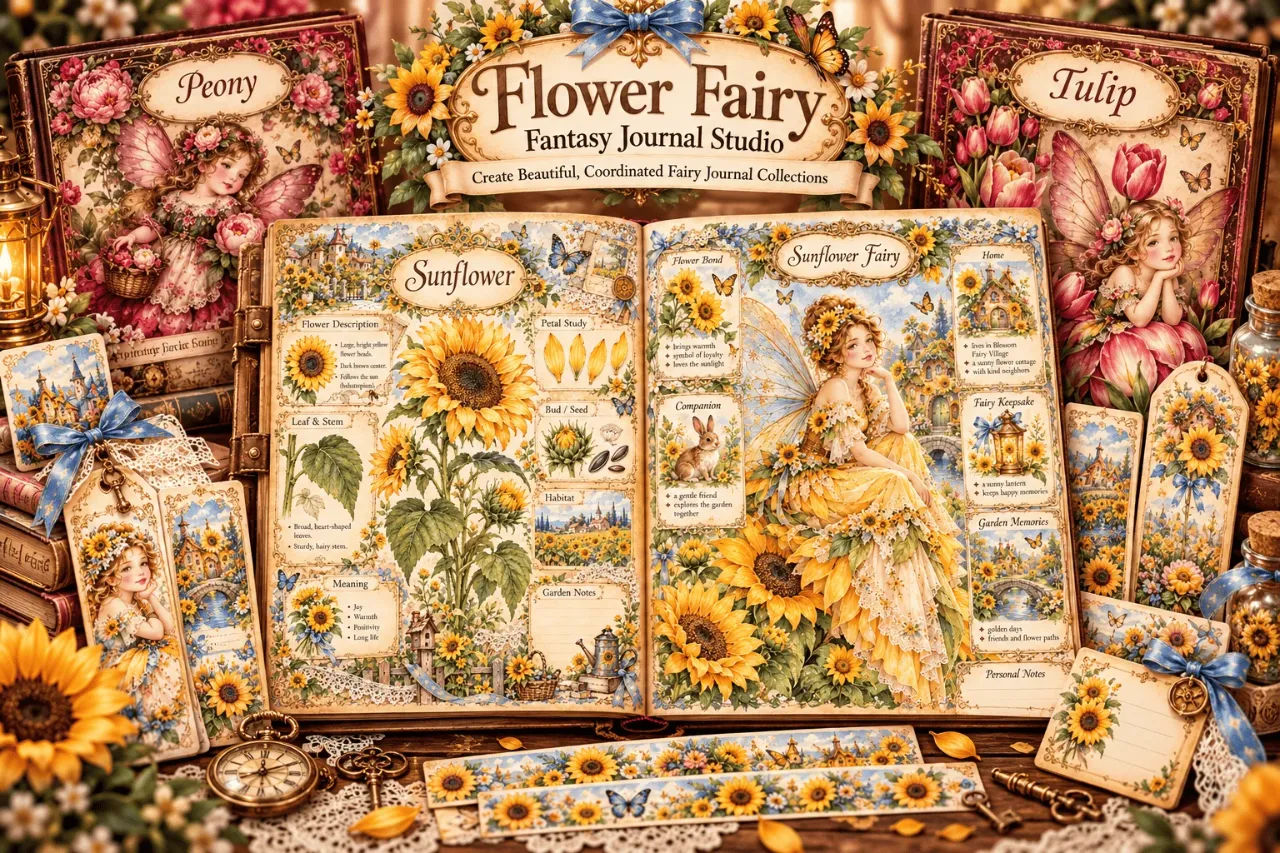
Flower Fairy Fantasy Journal Studio Review
I spent an afternoon with a $17 prompt app that writes fairy journal prompts for AI image tools. It does one narrow job well, and it does not make pictures.
Vintage Museum Crafts AI: 627 Prompts, Honestly Reviewed
A prompt library of 627 image prompts across 19 museum niches, plus an online app for prepping files. I ran it through ChatGPT and here is what came out.

Xmas Magic AI Review: Can It Really Build Christmas Products?
I took Xmas Magic AI's one-sentence promise and tried to make a sellable Christmas activity book. The puzzles work. The proofing is weaker than I hoped. Here is the full picture.